
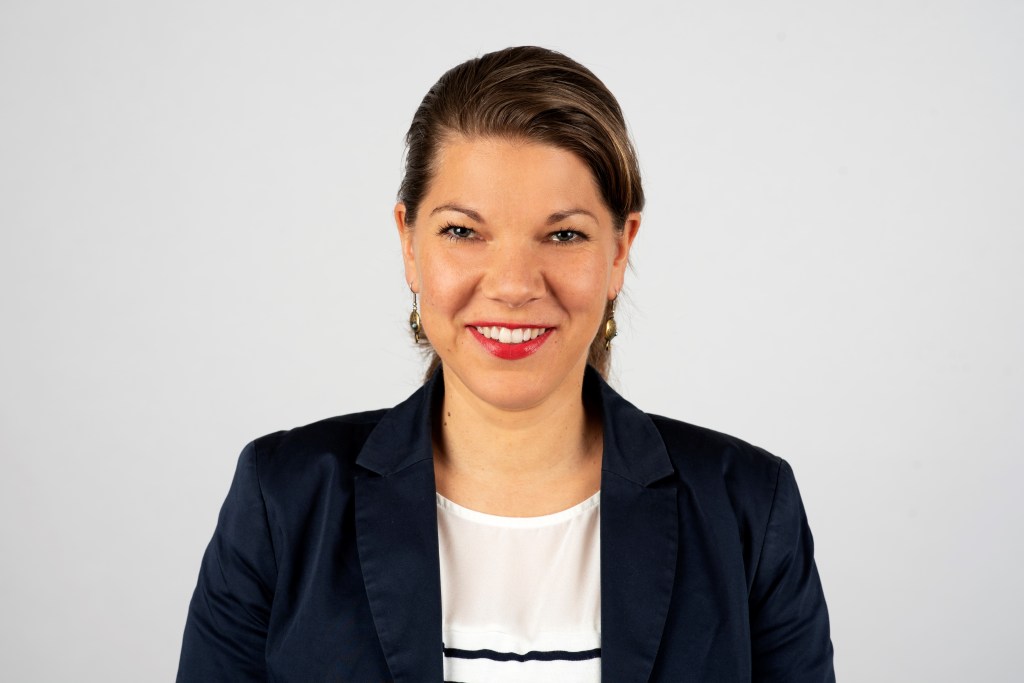
Why is cross-border journalism important? What is the impact of the coronavirus on journalism? How can we change our privileged mindset?Tabea Grzeszyk is a German freelance journalist and CEO of Hostwriter, a network that helps journalists to easily collaborate across borders. In this article she answers all your questions about the importance of international journalism.
Lieselot Lambinet – 06/26/2020
It’s so nice to meet you! How are you doing today?
I’m doing great! I’m actually in France now. As soon as the borders opened, my husband and I came over here from Germany. I’m working remotely close to the beach, so it’s very nice.
Has the corona pandemic had an influence on your job?
Of course. I haven’t been able to travel for my job as much as usual. A lot of what used to be face-to-face is now moved to a digital sphere. The pandemic plays a big role in journalism, but that mustn’t mean it only has a negative influence. I feel like it’s a two edged sword. It has been really tough for some journalists, some are incredibly busy, others have lost all of their writing opportunities. In that way, journalism is threatened and the problems that were already in the business have accelerated.
But on the other hand we see a rise of collaborative journalism. As long as most borders are closed, and journalists can’t go to the country where they want to report a story, they have to find alternatives. So now there is a big openness toward collaboration out of need. I think the business model of journalism is mainly at risk, not journalism itself. We can see that in Hostwriter too. News media now need to collaborate with local journalists instead of sending their own people. It’s a really exciting opportunity for our network.
Isn’t it more difficult to find local journalists during this crisis?
Personally speaking, as I run a collaboration network with over 5.000 registered freelancers in 154 countries, I think it is not more difficult to get in touch, because all the local journalists are already there. And even outside of Hostwriter, it is quite easy to find foreign contacts, for example through social media. I think the biggest difficulty on that matter is our mindset. We have to get rid of the ‘old way of thinking’, as in not trusting anyone but yourself to cover a story. These days, journalists have to rely on local fixers, but these are usually not treated as equals, not as co-authors on eye level. Collaboration isn’t just not being able to go there yourself, so having to rely on others. It is kind of the opposite, because you can improve your reporting through the local expertise and knowledge of those fixers. This is the paradox shift that might be accelerated because of the pandemic.
So it has become more mainstream to collaborate with local journalists?
I want to give you an example, because I have the impression that people are dealing with it very differently. There was a report on an international radio show about a German journalist who said the refugee crisis is in the shadows because everyone is focusing on the coronavirus pandemic. There is a lot of misbehaviour that goes unattended. The report was about refugees allegedly being mistreated in the Balkans. So he, as a German journalist, cannot travel there because the borders are closed, so he gets all this information from Facebook, which he cannot verify. Bottom line is, he explained how difficult it is to report and follow up stories when you cannot travel as a reporter. I understand what he means, but why on earth wouldn’t he collaborate with a local reporter for fact checking?
So people are really experiencing this crisis differently. My personal observation (there is not enough data to support this), is that legacy media are used to the privilege of being able to send their own reporters. There’s still a lot of resistance, as if when no western journalist can travel there, it is the equivalent of ‘we cannot report from there’. This is the moment to have an open mind, to collaborate with local colleagues.
I would say some of the smaller newsrooms and freelancers were much better prepared. They are used to working together and joining forces with other smaller newsrooms. They are picking it up much more easily and quickly than the legacy media because they don’t have this privilege.
Cross-border journalism also means collaboration between different cultures. Have you ever had any issues with clashing cultures?
Unfortunately, a lot of collaborations fail because of this. I have an example of a collaboration that failed between me and a Greek colleague. It was at a time when the power imbalance between Greece and Germany peaked because of Greece’s debt crisis. This person and I tried to be very pragmatic – I was in a good position to fundraise from German foundations, while my colleague had great connections for the project we were working on in Greece – and this felt like an actual win-win to me. But in the end, there was too much political pressure between Greece and Germany for us to continue our project.
I have the impression that people sometimes underestimate how different cross-border journalism is from national reporting. It’s not just calling someone on the phone and that’s it. You have to invest a lot in the relationships with your co-workers. You really need your soft skills, like intercultural communication, being able to question yourself and to understand that you have one perspective that is probably not the same as your contact person. This is exactly the moment where you can figure out your own blind spots. So this is actually a good thing.
You need patience, transparency and openness towards discussing and emotions. It really requires all the aspects of being a human being to be a journalist, not just certain skills. And that’s very interesting, but you should never underestimate it.
Do you think there are more pros than cons to international collaboration?
I would like to rephrase it. I honestly don’t think we have an option. I think this is the future. We live in a network society but we still have national and foreign reporting. But what is foreign when everything is interconnected? What is foreign about migration when this is the result of European policies, trade agreements or climate change? Some of the classical examples of cross-border journalism, like migration, climate change or now the pandemic, are actually impossible to cover as a foreign topic.
Collaboration is a necessity to quality journalism in the future
Tabea Grzeszyk
If we as journalists want to cover a story and fact-check it, I don’t think we have a choice. So to me, regardless of what are the pro’s and con’s, collaboration is a necessity to quality journalism in the future. Now already, but definitely in the future. I think we just have to learn this, it’s not our choice. But it’s also not for everyone. Some people just prefer to work by themselves and I think you cannot force people to have an open mind. It’s important to learn it, to experiment with it, to have an understanding of it. I don’t see a future where there will only be cross-border journalism, but one where cross-border journalism will become more of the new normal.
Is it more difficult to find journalists in countries where there is some kind of conflict?
At the moment we have members in 154 countries, including many countries where there’s war, where there are dictators, or other pressures on media freedom. In pre-internet times this was probably much more difficult. There were just a handful of people who built the bridges in their countries. I think it’s a lot easier right now. But journalism is different in different countries.
There’s a very interesting study called The World of Journalism Study. It is based on surveys, so it is a practical approach instead of theoretical ideas. They analysed four different journalistic cultures, and they put this in relation to the political regime. So when you and I talk about journalism, what we mean is a liberal democratic type of journalism. Journalism here is not the same as in transitioning countries. So for example, in an environment where there are more press freedom restrictions, you are much more likely to meet journalists who want to be actors of change, to play an active role in developing the country for the better. The role of what we consider to be journalism is not a single universal idea. It depends on the political climate and the restrictions of press freedom.
So yes, it might be more difficult to find a correspondent who shares the exact same idea of journalism as you do. But if you understand the political climate, the strategy and the role of the journalist, you can find very good correspondents. We have to really diversify our idea of what journalism is. Then you have a chance of getting good information and that is all that counts in the end. There are some basics to define quality journalism, like the two-sources-rule, the right to respond or fact-checking practices, but it is also important to be open and understand that beyond these basics, there are different journalistic cultures.
I have seen that you also published a book called Unbias the News. Why diversity matters for journalism.
This is exactly pointing at the discussion that we are having right now. The mission of this collaborative book project is to point out that journalism as we know it is still a western concept in a globally networked world. And we have to understand that it’s important to be aware of and to shed light on this western bias. The big news rooms like The New York Times or BBC have a huge influence on global reporting, but these are not representative of the diversity of the society. There’s a majority of white, western, male journalists in the mainstream media, which means that there’s a lack of diversity of voices, including migrant journalists, journalists of color, reporters with disabilities, etc.
So what we want to point out with this book is saying there’s a certain western bias which creates blind spots. And this is not a question of listening to under-represented voices in the context of a third world journalism project, diversity is not a moral case. It’s about improving the quality of our reporting and shedding light on our blind spots. To give an example from Germany, a right-wing terrorist group murdered 9 people with immigrant backgrounds and a policewoman between 2000 and 2007 out of racist hate, and the German media were framing the story as the Kebab Murders.
The Kebab Murders?
You know the Turkish meal kebab? Because one of the people who were murdered ran a dinner kebab local restaurant, German media used this term in headlines, reducing the victims to a snack dish and suggesting that the killings were a migrant problem. For almost a decade, German security authorities had been investigating in the wrong direction – and the media played a decisive role in this. They were missing this huge story, some men murdered people and not a single newsroom was on the real story. They we’re all on the ‘Kebab Murders’.
When did you come up with the idea of creating Hostwriter?
This goes back quite a long time. I did my journalism training in Germany, and afterwards, in 2009, a friend and I were couch surfing in Turkey, Syria and Lebanon. This was not even for journalistic purposes! There we met a lot of people, so I ended up having many good contacts. This I consider the real beginning of my journalistic career. I could use these contacts for reporting for German television and radio from Tunisia, Egypt and later Algeria, and this was amazing for me! I asked myself: ‘Why is there no couch surfing for journalists?’ The first step was to get in contact with CouchSurfing. I asked them to add a checkbox for journalists, but they weren’t interested, and that’s how it started.
We had to create a platform where journalists could meet each other to work together on stories. So the idea was there in 2009 but it took until 2013 to have a bit of capital from foundations to start funding the organization. We founded it as a non-profit organization in 2013 and in 2014 it went online. So now we are 6 years online.
Hostwriter is a collaboration network which you can use in three different ways. You can use the network to ask for advice or exchange ideas with your colleagues. You can also use our chatrooms to find co-authors, so there you can really team up together. The third way is couch surfing, you can search for couches or offer couches, for example to attend a journalism conference together with a hosted colleague. We keep this very open, so it’s quite flexible.
What are the qualities you think a good international journalist should have?
Apart from having good journalism skills, like being modest and being able to work in a team, I think what’s most important is having an open mind. Maybe the most necessary skill is to allow people to challenge their own view. Otherwise they would encounter the danger of ‘the single narrative’. This goes so much deeper than most people want to acknowledge, especially being a western white journalist. The most challenging is for people who are used to having a dominant perspective, to allow themselves to be challenged.

 Lieselot Lambinet